Slate vs Concrete Tile for Galway Roofs
What Suits Bungalows in Oranmore, Knocknacarra and Rural Connemara
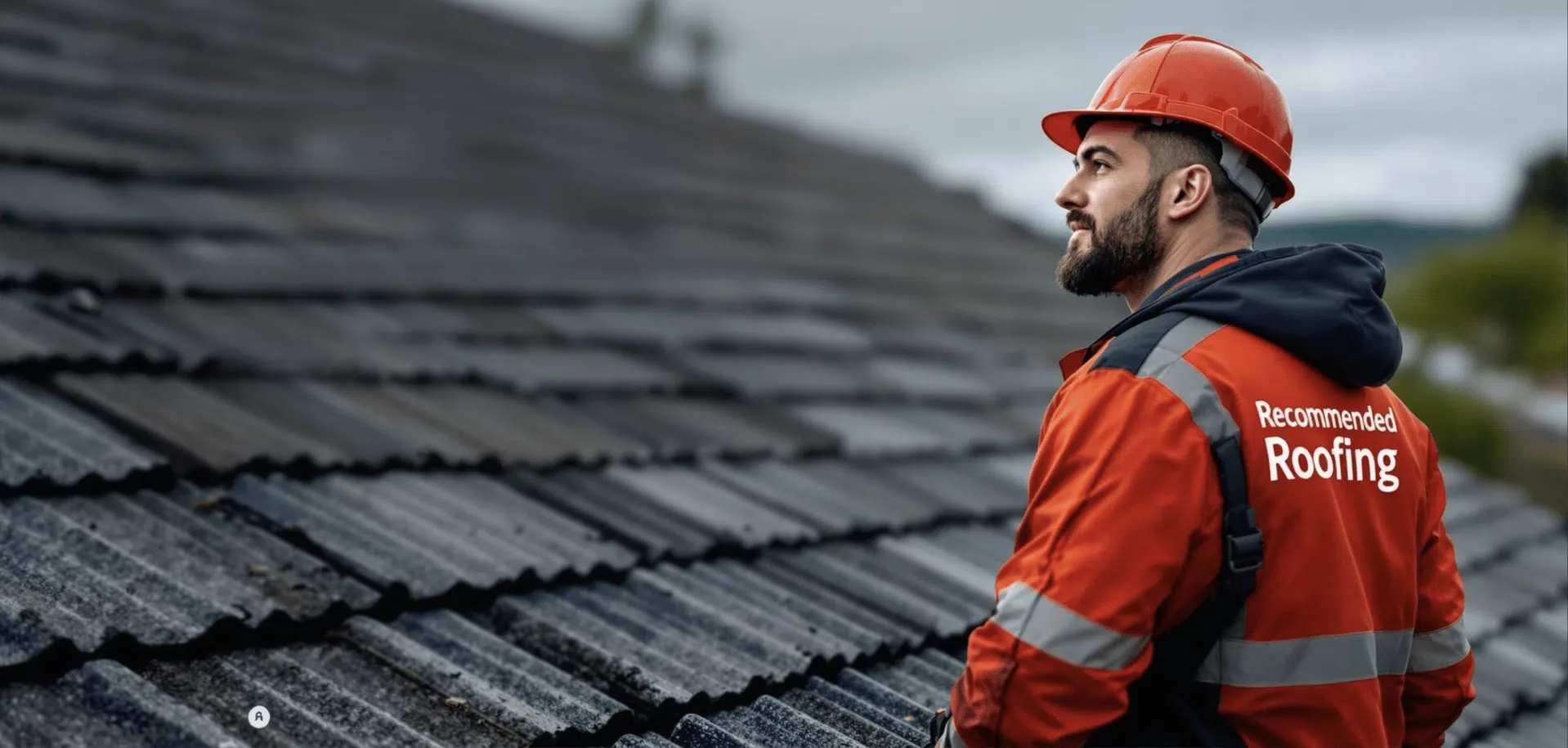

What Suits Bungalows in Oranmore, Knocknacarra and Rural Connemara
For most Galway bungalows, natural slate is the safer long-term choice within 5km of the coast (Knocknacarra, Salthill, Barna, Connemara), while concrete tile can work well inland around Oranmore, Claregalway and Athenry where salt exposure is lower and budget matters more. Slate lasts 80–100+ years, weighs less, and meets Galway County Council colour rules in scenic areas. Concrete tile costs roughly 30–40% less but is heavier and fades.
That's the short answer. The rest of this guide breaks down why — wind uplift on Atlantic-facing roofs, salt corrosion of nails and clips, planning colour conditions in Connemara, and what a re-roof actually costs in 2024/25. If you want a fixed-price quote for your bungalow, call 091 622895 or request a survey through our Galway roof repairs team.
Galway's roofs take a beating that Dublin's simply don't. The prevailing south-westerlies come off 3,000 miles of open Atlantic, hit Connemara first, and only lose real energy east of Loughrea. Met Éireann's Mace Head station regularly records gusts over 130 km/h in winter storms. Annual rainfall in parts of Connemara tops 1,600mm — nearly double Dublin's.
Then there's salt. Any roof within about 5km of the coast — think Knocknacarra, Salthill, Barna, Spiddal, Roundstone, Clifden, most of Oranmore's coastal side — is in a marine atmosphere. Chloride ions attack ferrous fixings, and that's where cheap roofs fail long before the tiles themselves give up.
So the slate-vs-concrete question in Galway isn't really about the tile. It's about weight, wind uplift resistance, fixing corrosion, and how the finish holds up in scenic zones under the Galway County Development Plan.
Natural slate — usually Spanish (Cupa, SSQ) or Brazilian on new work in Ireland, occasionally reclaimed Bangor or Killaloe on restorations — is the traditional cover for the 1970s and 80s bungalows that dominate estates like Renmore, Mervue, Roscam and older parts of Oranmore.
Where slate wins in Galway:
Where slate loses:
Concrete tile — Tegral (now Etex), Redland, Marley Eternit ranges — is the default on a huge number of Galway estate bungalows built between 1975 and 1995. It's not a bad product; it's just often used in the wrong place.
Concrete tile works well when:
Where concrete tile struggles:
This is the point most quotes gloss over. Along the Galway coast, the tile outlives the fixing. BS 5534:2014 (updated 2018) is now the standard for pitched roofing in Ireland, and in exposed coastal zones it requires:
For a bungalow in Barna or Spiddal, insist on A2 or A4 grade stainless throughout. The upgrade from galvanised to stainless adds maybe €400–€700 to a full re-roof and doubles the effective service life of the fixings. It's the single best value-for-money decision on any coastal Galway roof. We cover the detail on fixings and underlays on our residential roofing service page.
Ireland is split into wind zones for roofing purposes. Most of Galway sits in Zone 4 or 5 — the highest exposure category, alongside Kerry, Clare and Donegal. What that means in practice:
If your existing bungalow roof was done pre-2014 and hasn't been touched since, chances are it doesn't meet current standards. That's not an emergency — but it is worth factoring in when you're deciding whether to patch or re-roof.
If you live in a designated scenic area — most of Connemara, the coast road from Spiddal to Clifden, the Burren fringe near Kinvara, or a Gaeltacht area — the Galway County Development Plan 2022–2028 applies planning conditions to roof works, even on replacements.
Common conditions:
For anything other than direct like-for-like replacement in a scenic area, ring the council planning office in Prospect Hill before ordering materials. Section 5 declarations are often needed for material changes.
Indicative ranges for a typical 120m² Galway bungalow re-roof, strip and re-cover, including new underlay, battens, dry ridge, and standard leadwork:
| Cover type | Indicative range | Lifespan |
|---|---|---|
| Spanish natural slate (Cupa/SSQ) | €11,500–€15,500 | 80–100 years |
| Reclaimed Bangor/Killaloe slate | €14,000–€19,000 | 60–80+ years |
| Concrete tile (Redland, Tegral) | €7,500–€10,500 | 30–50 years |
| Fibre-cement slate (Cedral, Eternit) | €9,000–€12,500 | 50–60 years |
These are indicative 2024/25 figures — always get a fixed-price quote for your specific roof. Steep pitches, chimneys, dormers and access difficulties all move the number. Try our roofing cost calculator for a rough starting figure, or see examples of completed Galway work in our project gallery.
We also wrote about a full breakdown of Galway roofing prices by job type on our WordPress page.
Realistically 25–35 years before fixings fail and tiles start slipping, even if the tile itself still looks sound. Inland the same tile can last 40–50 years. Fixing corrosion, not tile wear, is what ends most coastal concrete roofs.
Only after a structural check. Concrete tile is roughly double the weight of slate, and older W-truss roofs weren't designed for it. Cheaper to replace with slate than to reinforce trusses.
Usually no, if the property is in a scenic area, Gaeltacht zone, or Area of High Amenity. Conditions typically specify natural slate or dark slate-effect. Check with the planning office before ordering materials.
Fibre-cement (Cedral, Eternit) is a manufactured board that mimics slate. It's lighter, cheaper (about 25% less than natural), and lasts 50–60 years. It passes most planning conditions for "slate-effect" finishes. It doesn't have the depth of colour or the resale appeal of the real thing.
Like-for-like replacement is exempted development. Changing material (e.g. slate to tile, or tile to slate) in a scenic area may need a Section 5 declaration or full planning. Always check with Galway County Council before you start.
Look at the underside of the roof from the attic in daylight. Rust stains on the underlay or timbers under the nail heads, or nails you can pull out with finger pressure, mean the fixings are gone. That's a re-roof conversation, not a repair. --- Need a straight answer on your own roof? We survey Galway bungalows from Oranmore to Clifden and give a fixed-price quote — no pressure, no fake urgency. Call 091 622895 or get in touch with our Galway roofers for a free survey.
Nearby areas we cover
Roof Repairs in Galway, Ireland. Free survey, written fixed-price quote, 10-year guarantee.