Clifden weather and your roof
How does the weather affect roofs in Clifden?
Clifden is a coastal town in Connemara, on the Owenglin River where it meets Clifden Bay, so roofs there are generally more open to wind and driven rain than those in towns further inland. Wind lifts loose slates and ridge tiles, and sea air can wear on exposed metal and mortar over the years. Faults are best caught early, before water reaches the attic timbers.
What should Clifden homeowners check after a winter storm?
Look from the ground for slipped or missing slates and tiles, shifted ridge tiles and lifted lead around the chimney. On the next wet day, check the attic for daylight, damp patches or dripping. Check gutters and fascia too, as these take the first hit in strong wind.
How often should a roof in Clifden be inspected?
Once a year, ideally in autumn before the wet months, and again after any severe storm. Exposed roofs are worth a closer look at the ridge, verges and chimney flashing, which are the parts wind works on first.
Clifden property types
What kind of buildings are in Clifden?
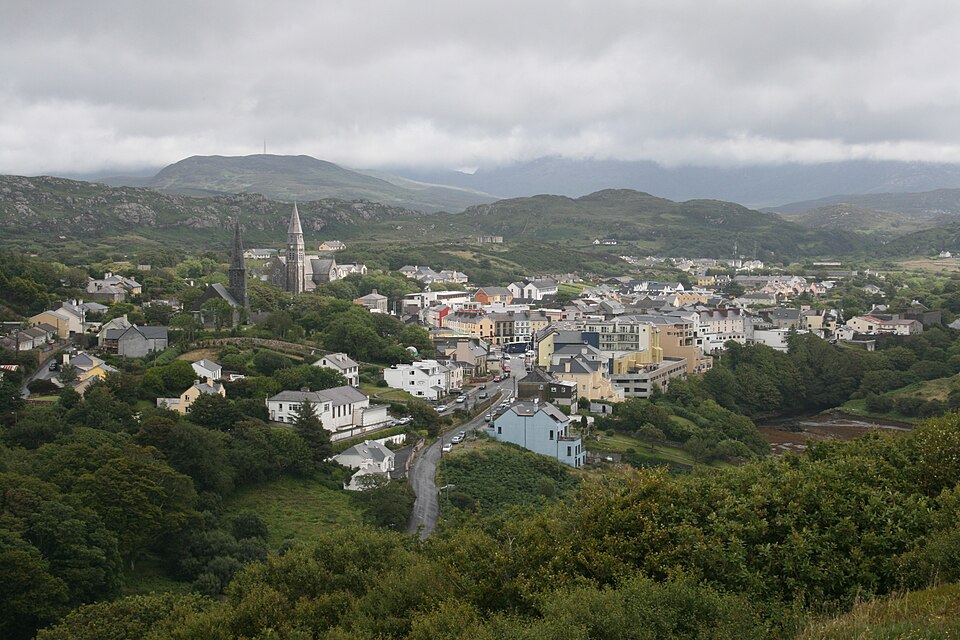
Clifden is a planned town, founded in the early 19th century by John D'Arcy, and it grew after a quay and a road to Galway were built. By 1839 it had 185 dwellings, most of them three storeys high. Christ Church dates from 1853 and St Joseph's church from 1879, and the triangle of streets is still visible today.
Is my Clifden house in a conservation area?
Galway County Council's plan for Clifden states that the town is designated an Architectural Conservation Area, and it names the Court House and both churches as Protected Structures. We could not read the boundary, so check with the council whether your address falls inside it. In those cases a change to the visible look of a roof, such as natural slate to concrete tile, can need planning permission. The council's own record is the one that counts.
Is a new roof in Clifden a job for slate or tile?
It depends on what is on the house now and whether the property is protected or inside the conservation area. Older town-centre buildings are often best repaired or re-laid in natural slate, and newer housing is more often concrete tile. The survey decides, and the written quote shows both options where both are allowed.