Chimney Repair Prices in Dublin
Repointing, Rebuilds, Flashing and Cowls — What a 2026 Quote Actually Looks Like

Repointing, Rebuilds, Flashing and Cowls — What a 2026 Quote Actually Looks Like
Chimney prices in Dublin move on four things, in this order: access, height, mortar specification, and lead. Everything else, bricks, cowls, pots, is small money by comparison.
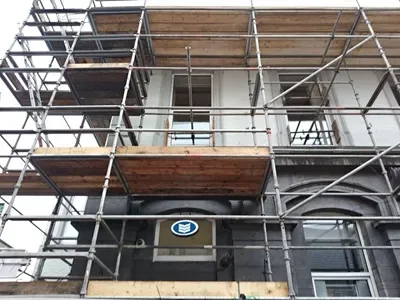
Access is the biggest variable. A mid-terrace Victorian in Rathmines with a shared entry and a garden you cannot reach a scaffold through can add several hundred euro to a job that would be straightforward on a detached property in Sandyford. Dublin's older housing stock, the red-brick terraces around Ranelagh, Portobello and the north inner city, built between 1880 and 1920, has stacks sitting 6 to 9 metres off the ground with limited street frontage. That means edge protection, a proper independent scaffold, and sometimes a permit from Dublin City Council for footpath occupation.
Height matters because scaffolding is priced by lift. A two-storey terrace stack needs two lifts; a three-storey Georgian off the South Circular needs three, and the price climbs accordingly. Bungalows in Templeogue or Knocklyon are the cheapest chimneys in the city for exactly this reason.
Mortar specification matters more than most homeowners realise. Pre-1940s Dublin brick was laid in lime mortar, and repointing it in modern sand-cement is a mistake. The hard mortar traps moisture in soft Victorian brick and the face of the brick can blow off in the first hard frost. Proper NHL 3.5 lime repointing costs more than sand-cement but is the only correct specification for period stacks. If your quote does not specify the mortar, ask before you sign anything.
Lead is where quotes diverge most. Code 4 lead is fine for aprons; Code 5 is standard for soakers and back gutters around a stack. Cheap jobs reuse the old lead or use lead flashing tape. Both tend to fail within a couple of winters on an exposed Dublin stack. See our dedicated guide to lead flashing and chimney aprons in Dublin for more on specifying this correctly.
Coastal-facing stacks in Howth, Sutton and Clontarf weather roughly twice as fast as inland Dublin 6 stacks. Expect repointing intervals of 15 to 20 years on the coast rather than 25 to 30 inland.
All figures below are indicative 2026 ranges for the Dublin market. VAT at 13.5% applies on top. Every job is priced individually after a free site survey.
| Work | Low end | High end |
|---|---|---|
| Repointing existing stack (2-storey terrace) | €450 | €1,400 |
| Repointing (3-storey / detached / lime mortar) | €900 | €2,000 |
| Lead flashing renewal (Code 4/5, full perimeter) | €350 | €900 |
| New flaunching (top cement bed around pots) | €180 | €450 |
| Chimney cowl or bird guard, supplied and fitted | €120 | €280 |
| Replacement chimney pot (single, clay) | €180 | €400 |
| Partial rebuild (top 4 to 8 courses plus flaunching) | €1,800 | €4,500 |
| Full stack rebuild from roofline | €3,500 | €7,500 |
| Chimney removal below roof, make good | €1,400 | €3,800 |
| Scaffold hire (2-week minimum, Dublin) | €400 | €1,200 |
Repoint and reflash a Terenure semi. Two-storey red-brick semi, 1930s build, stack about 1.2 metres above ridge, four pots. Mortar was crumbling and the lead apron on the low side was lifted. Scaffold for one week, lime repoint of the stack, Code 5 lead apron and soakers renewed, new flaunching, two bird guards on unused pots. A very typical mid-range Dublin chimney job. See also our roof repairs in Terenure page for the wider roofing picture in that area.
Partial rebuild in Clontarf. Three-bed detached, coastal exposure, stack visibly leaning after storm damage. Top six courses rebuilt in reclaimed matching brick, new flaunching, two new clay pots, Code 5 lead all round, scaffold for two weeks because of side-return access. Coastal salt air was the reason the stack degraded faster than an inland equivalent. This pattern is common from Howth around to Clontarf and Sutton.
A quote that dodges the detail is a quote that will grow on the invoice. Any written quote for chimney work should specify:
If a verbal price is offered off the ladder with no breakdown, that is your cue to get a second opinion. Our guide on how to vet a roofer in Dublin covers the questions worth asking before any contractor goes on your roof.
Homeowners often ask for a repoint when the stack actually needs rebuilding. The tell-tales are:
Our roof repairs page covers the wider repair-versus-rebuild question, including the photographic evidence we gather before quoting rebuild work, which is useful if the damage is storm-related and you are making an insurance claim.
Dublin's east-coast exposure means chimneys take a regular battering. Chimneys are the highest, most exposed part of a house and they absorb the worst of any storm. If a stack has partially collapsed or pots have blown off, most household policies cover storm damage, but the insurer will want dated photographs, a written scope of works, and a VAT invoice from a registered contractor. We put all three together as standard and can assist with the documentation at the inspection stage.
For storm or emergency situations, see our emergency roof repair service. We can make a chimney safe on the same day and follow up with a full written scope for the permanent repair once the access is in place.
Recommended Roofing has been CIRI registered since 2019 and employs its crews directly, the people on your roof are ours, with no subcontracting. On chimney repair work, we provide a written guarantee of a minimum of 3 years, rising to up to 10 years on major repair work such as a full or partial rebuild. Where a chimney rebuild is carried out as part of a full roof replacement, the Lifetime Leak Guarantee applies to the roof covering. All guarantees are written and handed over before contracts are signed, not promised afterwards.
We carry €6.5 million public liability insurance and are registered on the Construction Industry Register Ireland (ciri.ie). You are welcome to verify both before appointing us. See what Dublin customers say about working with us on our reviews page.
“Really happy with service provided. They were extremely helpful and efficient from start to finish. An assessment and quote were provided the day after I first got in touch, and the repair was completed within a week. The issue and proposed solution were clearly explained, and I really appreciated that they recommended a proportionate repair rather than simply suggesting everything needed to be replaced. Very professional, straightforward and efficient service. Would definitely recommend!”Alice Daniels, Dublin, ★★★★★ on Google
We carry out chimney repointing, flashing renewal and stack rebuilds across all four cities we serve. If you are outside Dublin, see the relevant local guides:
We visit, take ladder or drone photographs, and email a written quote with the mortar spec, lead code and access method clearly listed. To book a free, no-obligation survey, visit our contact page or call 01 2657795.
Indicative ranges for a standard two-storey terrace run from around €450 to €1,400. A three-storey property, a detached house or a stack requiring lime mortar rather than sand-cement will sit toward or above the upper end of that range. VAT at 13.5% applies on top. A free site survey gives you a fixed written price.
Indicative range for a full-perimeter renewal in Code 4 or Code 5 lead is roughly €350 to €900, depending on the size of the stack and access. Skipping the flashing renewal on a repoint is the single most common reason a job leaks again within a couple of winters.
Taking a stack down to the flaunching and rebuilding the top four to eight courses typically ranges from around €1,800 to €4,500 in Dublin. Scaffold access, not the bricks themselves, is the main driver of where you land in that range.
Scaffold hire for a two-week minimum in Dublin typically adds €400 to €1,200. A tower scaffold or cherry picker can be used on suitable stacks under about 7 metres with clear ground access, and is usually cheaper than a full independent scaffold.
For anything beyond a single pot swap or cowl fit, a scaffold, tower or mobile elevated work platform is required. Working off a ladder at 8 metres to repoint a stack is not compliant with Irish working-at-height rules and should be a red flag on any quote.
Inland Dublin stacks in sand-cement mortar typically last 25 to 30 years between repoints. Lime-mortar Victorian stacks can go 40 years or more. Coastal-facing stacks in Howth, Sutton and Clontarf need attention every 15 to 20 years because of salt weathering.
Chimney repairs carry a written guarantee of a minimum of 3 years, up to 10 years on major repair work such as a full or partial rebuild. Where a rebuild is part of a full roof replacement, the Lifetime Leak Guarantee applies to the roof covering as well. All guarantees are in writing before contracts are signed.
Storm damage and impact damage such as a falling pot are usually covered by standard household policies. Gradual weathering, mortar failure and general wear are not, as they are classed as maintenance. Insurers typically ask for dated photographs, a written scope of works and a VAT invoice from a registered contractor. We produce all three as standard.
Renewing the lead flashing and flaunching, without touching the brickwork, will stop most stack leaks and is the right first step when the brickwork itself is still structurally sound. If the mortar joints are open, repointing needs to be done at the same time or the leak returns.
Removing a stack below the roofline and making good the slates or tiles is a viable option, with indicative costs in the €1,400 to €3,800 range in Dublin. Before proceeding on a terrace, check the party wall situation. You usually cannot remove your half of a shared stack without your neighbour's agreement.
Lime mortar (NHL 3.5) costs 20 to 30 per cent more to apply than sand-cement, but it is the correct specification for pre-1940s Dublin brick. Hard sand-cement mortar traps moisture in the softer Victorian brick behind it, which can cause the brick face to blow off in frost. On a period stack, lime mortar is the cheaper option over any 20-year horizon.
Yes. A quote visit for work we could carry out is free and no obligation. We come out, take photographs, and email a written breakdown with the mortar spec, lead code and access method all clearly listed. Call 01 2657795 or use the contact page to book.
Roof Repairs in Dublin, Ireland. Free survey, written fixed-price quote, 10-year guarantee.