Solar Panel Grants Ireland 2026
Homeowner Guide

Homeowner Guide
Irish homeowners can claim up to €1,800 through the SEAI Solar PV Grant in 2026, with no VAT on domestic solar installations under 6kWp. While the Federation of Master Builders has published a detailed UK 2026 solar funding update, Ireland's grant landscape works differently — and your roof's condition often decides whether you can claim at all.
Ireland's primary supports are the SEAI Solar Electricity Grant (up to €1,800), the 0% VAT rate on residential solar PV installations (extended in Budget 2025), and the Microgeneration Support Scheme which pays you for electricity exported to the grid via the Clean Export Guarantee tariff. Local authority rates exemptions and Home Energy Upgrade Loans (3.5% APR) also apply.
The Federation of Master Builders' 2026 update flags a renewed UK push on domestic solar — including ECO4 extensions and Home Upgrade Grant changes. Irish homeowners often read UK coverage and assume the same schemes apply. They don't. However, three lessons translate directly:
Introduced in May 2023 and confirmed in Budget 2025, this saves roughly €1,500–€2,500 on a typical 4kWp installation. It applies only to supply-and-fit by VAT-registered contractors — DIY purchases still attract 23% VAT.
Homeowners can export surplus electricity and receive the Clean Export Guarantee payment, currently between €0.18 and €0.21 per kWh depending on supplier (Electric Ireland, Energia, SSE Airtricity, Bord Gáis). The first €400 of annual export income is tax-free.
A government-backed scheme via participating banks offering 3.5% APR on loans from €5,000 to €75,000 for energy upgrades including solar PV, insulation and heat pumps. No early repayment penalties.
Some councils — including Cork City Council and Dún Laoghaire-Rathdown — offer planning exemptions for domestic solar arrays up to 60m² on pitched roofs, removing a previous bottleneck for terraced and semi-detached homes.
| System size | Typical home | Indicative installed cost (pre-grant) | After SEAI grant |
|---|---|---|---|
| 2kWp (5 panels) | 1–2 bed apartment/cottage | €5,500–€7,000 | €4,100–€5,600 |
| 4kWp (10 panels) | 3-bed semi-D | €9,000–€12,000 | €7,200–€10,200 |
| 6kWp (14–16 panels) | 4-bed detached | €12,500–€16,500 | €10,700–€14,700 |
| 4kWp + 5kWh battery | 3-bed semi-D | €13,500–€17,000 | €11,700–€15,200 |
Indicative ranges based on 2026 Irish-market quotes. Confirm exact pricing with an SEAI-registered installer — costs vary by roof pitch, access, inverter brand and scaffolding requirements.
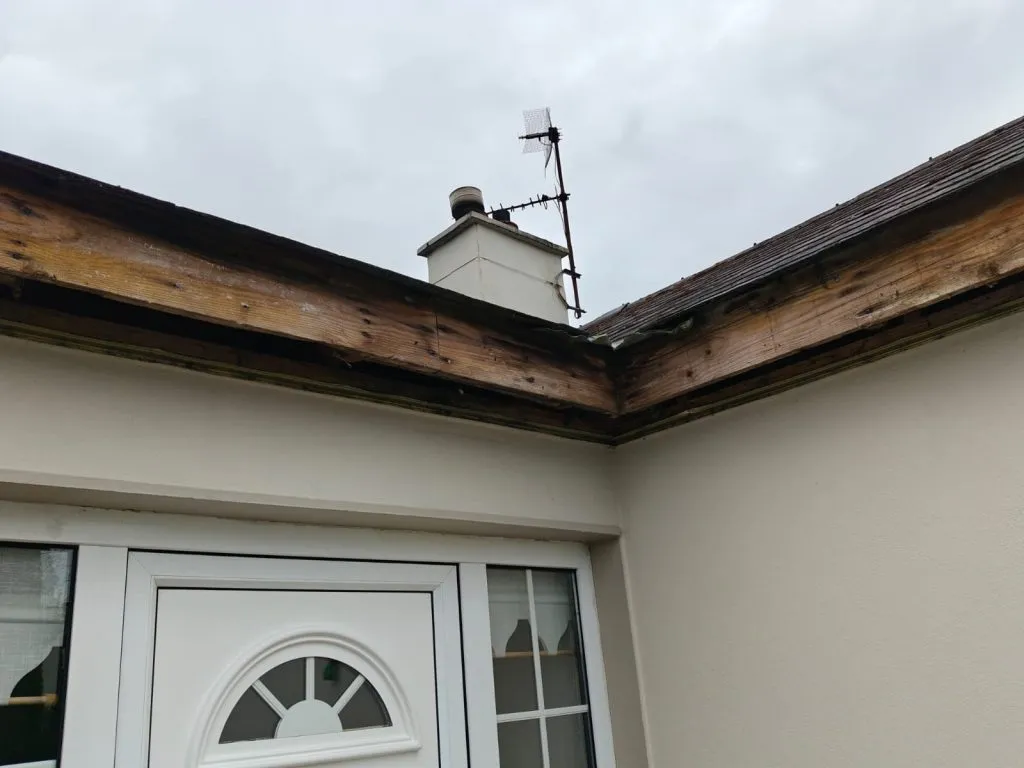
This is where most Irish homeowners get caught out. A 4kWp array weighs roughly 80–100kg and stays on the roof for 25+ years. SEAI-registered installers will refuse the job — and void warranty cover — if the roof underneath isn't sound.
Common Irish roof issues that block solar installation:
If any of the above applies, you'll need remediation before panels go up. We always recommend a professional roof inspection before committing to a solar contract — it's cheaper to discover problems now than after €1,800 of scaffolding goes up.
For older properties or those showing wear, a full roof renovation before solar installation often makes financial sense: you align two 25-year lifecycles and avoid removing panels for repairs in year seven.
Total: 5–6 months from first inspection to grant in your account is realistic. Anyone promising faster is likely cutting corners on either the inspection or the grid notification.
With export tariffs at €0.18–€0.21/kWh and import rates at €0.32–€0.38/kWh, batteries shift consumption from grid to self-generated power — saving roughly €0.15–€0.18 per kWh stored. A 5kWh battery cycling daily saves about €275–€330 per year, giving a payback of 12–15 years on a €4,000 unit. The maths only works for households consuming most electricity in the evening.
The FMB's UK guidance covers ECO4, the Home Upgrade Grant, and Smart Export Guarantee — none of which apply in Ireland. Conversely, our 0% VAT rate and €1,800 grant are more generous than current UK domestic supports. Be cautious of social media advice that conflates the two markets; quoting UK figures to an Irish installer wastes everyone's time.
If you're considering solar and want your roof checked first across Cork, Limerick, Galway or Dublin, request a free roof inspection quote and we'll tell you honestly whether your roof is solar-ready or needs work first. Call 01 2657795 for same-week appointments.
No. The schemes covered by the FMB — ECO4, Home Upgrade Grant, Smart Export Guarantee — are UK-only. Irish homeowners access support through SEAI, the 0% VAT rate, the Microgeneration Support Scheme and Home Energy Upgrade Loans.
Yes, but the SEAI grant doesn't cover roof repairs. You must complete remedial works at your own cost, then proceed with a registered installer. Most reputable installers refuse to mount panels on roofs with under 10 years of remaining life.
Indicative installed costs range from €9,000–€12,000 before the SEAI grant, falling to €7,200–€10,200 after the €1,800 grant. Battery storage adds €3,500–€5,000. Confirm exact rates with your installer.
Most domestic installations under 60m² on pitched roofs are exempt under 2022 planning regulations. Protected structures, Architectural Conservation Areas and ground-mounted arrays still require permission. Check with your local council.
Tier-1 panels carry 25-year performance warranties and typically operate for 30+ years. Irish weather — particularly salt-laden air in coastal Galway, Cork and Wexford — accelerates inverter wear, so budget for inverter replacement around year 12.
If your roof is over 20 years old or showing signs of nail sickness, slipped slates or sagging, yes. Removing and reinstalling panels later costs €1,500–€2,500 in scaffolding and labour alone. Aligning the two lifecycles saves money long-term.
Roof Repairs in Ireland. Free survey, written fixed-price quote, 10-year guarantee.